German courses, job ads and visa rules all talk about levels: A1, A2, B1, B2. These come from the Common European Framework of Reference for Languages (CEFR). Each level describes what you can actually do with the language, not how many words you know.
A1: your first steps
At A1 you can introduce yourself, say where you live and work, ask and answer simple questions, and understand slow, clear German about familiar topics. You can fill in a form with your name, address and date of birth.
In real life: ordering in a café, buying a train ticket, telling a colleague your name and job.
A2: everyday life on your own
At A2 you handle routine situations without help: shopping, appointments, talking about your day, your family and your work. You understand short, simple texts such as notices, messages and timetables, and you can write a short email.
In real life: making a doctor's appointment, asking your landlord about a repair, chatting with neighbours.
B1: independent in most situations
At B1 you can deal with most situations that come up when you live or travel in Germany. You can describe experiences and plans, give reasons for your opinion, and follow the main points of clear speech on familiar topics. B1 is often required for residence and citizenship purposes, and for many jobs.
In real life: explaining a problem at the bank, taking part in a team meeting about familiar topics, writing a complaint.
B2: confident at work
At B2 you speak fluently enough that conversations with people who grew up speaking German work without strain on either side. You understand the main ideas of complex texts, including technical discussions in your field, and you write clear, detailed texts. Many employers and professional bodies, for example in nursing, ask for B2.
In real life: presenting at work, negotiating a contract detail, following the news.
How long does each level take?
It depends on your first language, how much time you have and how often you practise. As a rough guide, many learners need several months of regular study per level, and each level takes longer than the one before. Daily practice of 20 to 30 minutes usually beats one long session a week.
Where should you start?
If you are new to German, or your school German is long forgotten, start at A1. If you can already handle simple everyday conversations, test yourself with the first units of A2. Each Learn Real German book starts with what you should already know, so you can check quickly whether a level fits.
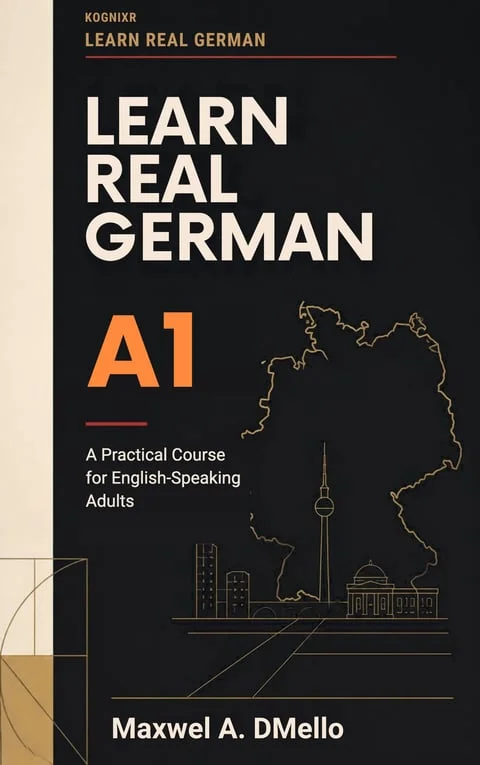
- Learn Real German A1: starting from zero
- Learn Real German A2: everyday German for life and work
- Learn Real German B1 and Learn Real German B2: independent and confident German
Every book page has a free sample, so you can read the first pages before you buy. Working in care? Read which German level nurses need in Germany.
Starting from zero? See how to learn German A1 to A2 as an English speaker, or study online with the German A1–A2 course.